Digital and Technologies

The digital and technologies sector creates and supports the technology we use every day. It includes software, websites, apps, cyber security, data, and digital services, helping people stay connected, work, learn, and access information.

Careers in Digital and Technologies

The Digital and Technologies sector offers a wide range of career opportunities and is one of the fastest-growing industries in the region. It is a great place to work, with roles for people at all stages of their career and opportunities to develop future-focused skills. You could work as a software developer, cyber security analyst, IT support technician, web designer, data analyst, or digital marketer. Whatever role you choose, you can make a real difference by helping organisations use technology to improve services, solve problems, and drive innovation.

Bristol robotics lab
Salary Information

How much can you earn working in Digital

Digital industries offers a range of entry-level jobs that can help you gain experience and build new skills. As you learn and develop, you may have the chance to move into more senior roles with greater responsibility and higher pay.

Salary ranges are based on job adverts from August 2026 and can vary depending on experience, qualifications, employer, and location. It may take time to gain the skills and experience needed to progress to the next career level and salary range.

£0
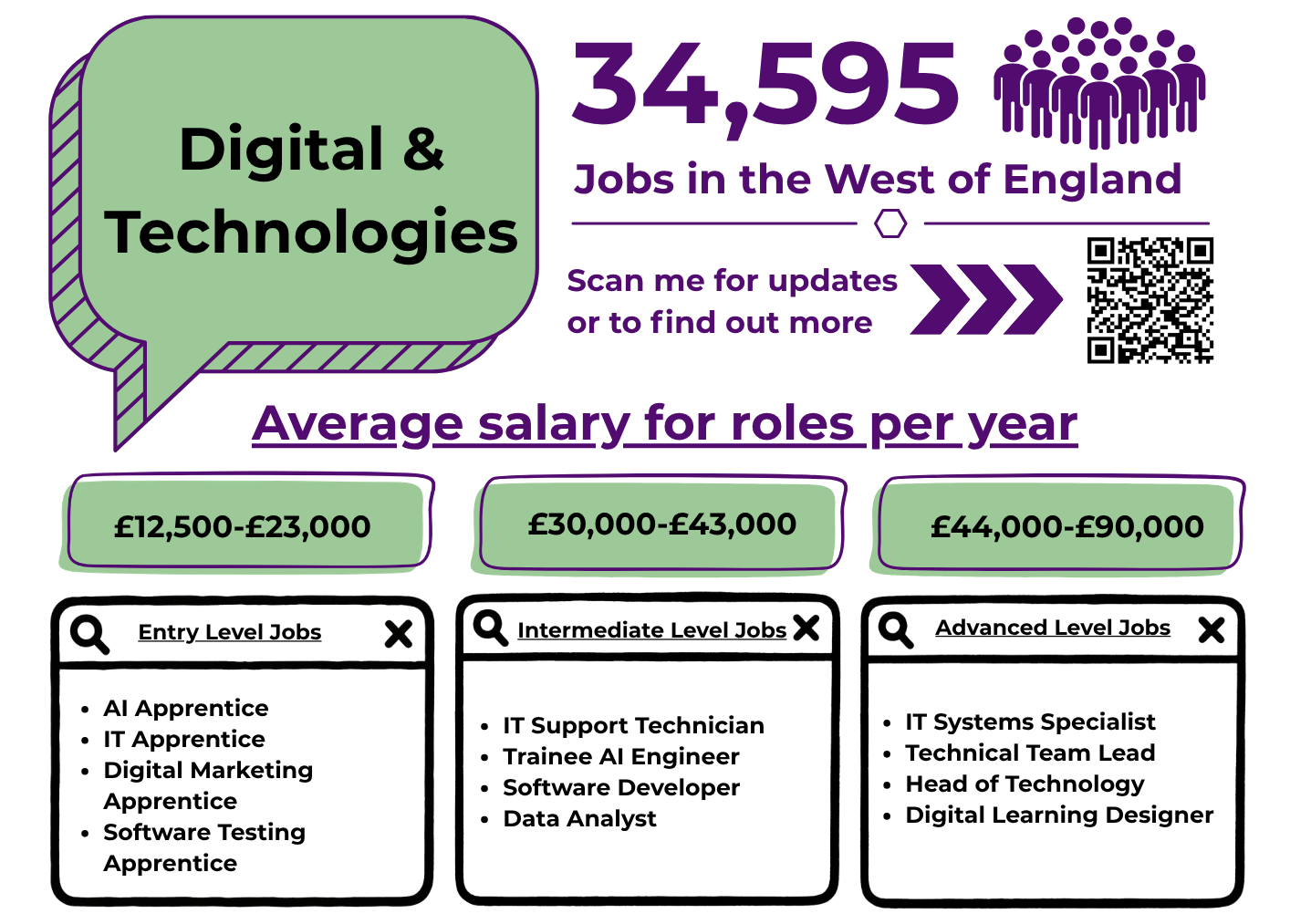
Entry Level roles may range from £12,500 to £23,000 a year.
£0
Intermediate roles may range from £30,000 to £43,000 a year.
£0
Advanced roles may range from £44,000 to £90,000 a year.
Careers in Digital Industries

View a variety of jobs

Discover the different careers available in digital industries, from cybersecurity, to user research, software development, and leadership jobs. Click on the job profiles below to find out what each role involves, the skills you need, and the steps you can take to progress.


Entry Level

Salary: £24,000 to £36,000

Entry Level

Salary: £24,000 to £35,000

Entry Level

Salary: £24,000 to £48,000

Intermediate

Salary: £31,000 to £65,000

Intermediate

Salary: £28,000 to £65,000

Intermediate

Salary: £34,000 to £68,000

Advanced

Salary: £35,000 to £75,000

Advanced

Salary: £32,000 to £83,000

Advanced

Salary: £36,000 to £85,000

1 /
Local Learning Opportunities

Find Your Next Step

Check out our Skills Connect Directory for a list of opportunities and places to train in your region to help you kick start your career in digital industries.

View Opportunities

Image credit: Pexels

Top Skills

  • Attention to Detail: Checking work carefully to ensure accuracy and quality.
  • Verbal and Written Communication: Explaining information clearly to different audiences.
  • Teamwork: Working effectively with colleagues to achieve shared goals.
  • Organisation: Managing tasks, priorities and deadlines efficiently.
  • Problem-Solving: Finding logical solutions to technical and business challenges.
  • Digital Skills: Using technology, software and online tools confidently.
  • Critical Thinking: Assessing information and making informed decisions.
  • Creativity: Developing innovative ideas, products and solutions.
  • Programming and Software Development: Creating, testing and improving software applications and systems.
  • Programming Languages: Using coding languages such as Python, JavaScript, SQL and C# to develop digital solutions.
  • Data Analysis: Collecting and interpreting data to support decision-making.
  • Artificial Intelligence (AI): Using AI tools and technologies to automate tasks and solve problems.
  • Cloud Technologies: Working with cloud platforms such as Microsoft Azure to manage digital services.
  • Project Management: Planning and delivering technology projects successfully.
  • Agile Methodology: Using flexible ways of working to develop and improve products.
  • User Experience (UX) and Design: Creating digital products that are easy and enjoyable to use.
  • Cyber Security Awareness: Protecting systems, data and users from digital threats.
  • Web Development: Building and maintaining websites and online applications.
  • Flexible: Adapting to new technologies, tools and ways of working.
  • Curious: Enjoying learning about new developments in technology.
  • Analytical: Looking at information carefully to identify patterns and solutions.
  • Innovative: Finding creative ways to improve products, services and processes.
  • Logical: Approaching problems in a structured and organised way.
  • Resilient: Staying motivated when tackling complex challenges.
  • Observant: Noticing errors, opportunities and areas for improvement.
  • Lifelong Learner: Continuously developing skills and knowledge in a fast-changing sector.
Resources

Sector Insights Information Sheet

Use this downloadable poster to share and explore key data and insights on education, training and employment opportunities featured on this page. Designed to support informed discussions and decision-making, this summary poster can be used by students, parents, educators and careers advisers.
View Poster

Explore More

Careers that use similar skills

If you are interested in a career in digital industries, you may also want to explore other careers that require similar skills. If you like designing and developing products and services, being creative, and making a difference, you may also enjoy some of these opportunities:

1 /